
Teaching Clarity Library
Welcome to the Teaching Clarity Library, a collection of research-informed planning tools that help teachers design coherent units, clarify lesson focus, and increase student engagement. These visuals connect clarity of goals to daily instruction so planning feels intentional, manageable, and grounded in what students actually need.
This is a growing collection of visual thinking tools for teachers and instructional designers.
Each graphic is designed to slow planning down, surface what matters most, and support real classroom decision-making — especially when time, energy, or clarity are limited.
These aren’t templates to follow blindly.
They’re prompts to think with.
Come here when planning starts to feel heavy.
Explore the lenses below to see how planning, instruction, and engagement work together to support student thinking. Start anywhere. Each lens connects to the others.
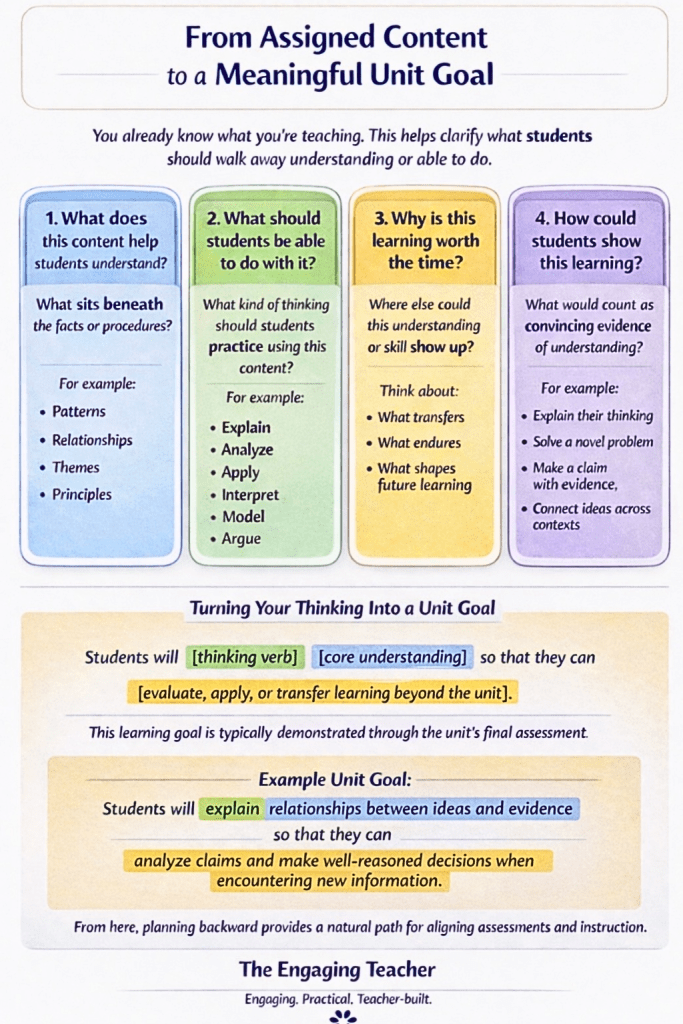
Clarifying the Unit Goal: A framework for backward design, alignment, and meaningful learning
Teachers are often given content to teach, but far less support in defining a clear unit learning goal centered on student understanding and transfer.
For new teachers:
Use this framework when you are handed a text, topic, or standard and are not sure where to start. It helps you slow down, identify what students should understand and be able to do, and plan with purpose instead of pressure.
For mentor teachers & instructional coaches:
Use this as a planning or reflection tool during unit design conversations. It supports backward design, helps surface thinking beneath content, and creates a shared language for alignment between goals, instruction, and assessment.
When the unit goal is clear first, lesson planning becomes more intentional and assessment naturally reflects learning rather than coverage.
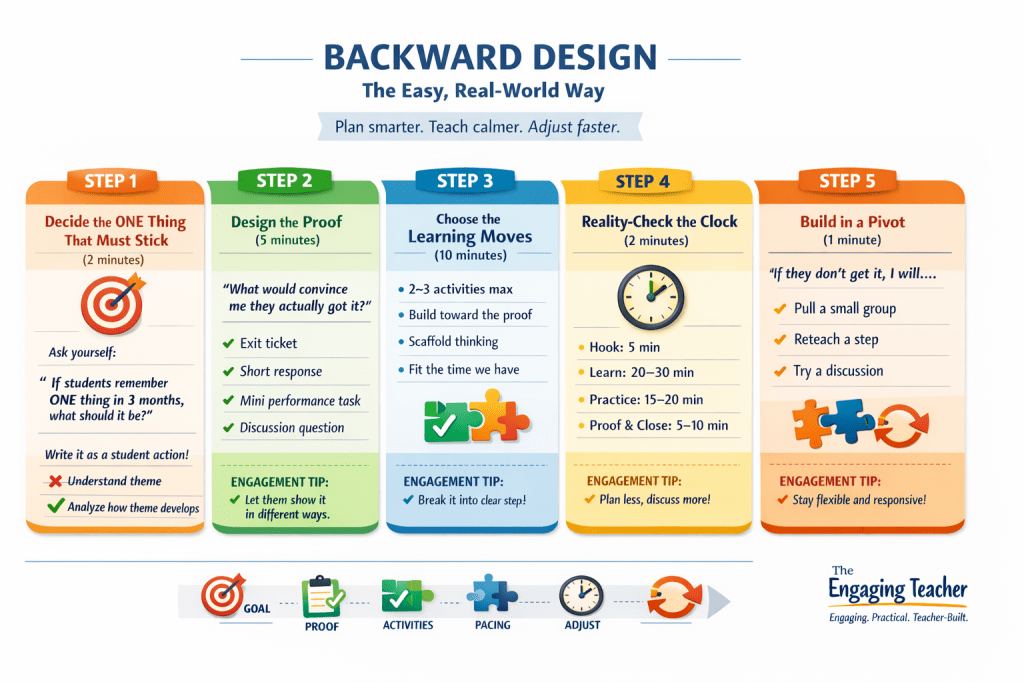
Backward Design: Planning From What Matters
Think blueprint before materials: learning is strongest when goals and evidence of understanding guide instructional decisions from the start.
For new teachers:
When the curriculum is new, it’s hard to know what actually matters most. This visual helps you start with the learning that should last — then work backward to choose activities that support it, without overplanning or second-guessing every choice.
For mentor teachers & instructional coaches:
Use this as a shared planning anchor. It gives newer teachers language for prioritizing outcomes and helps planning conversations stay focused on learning instead of logistics or materials.
Once outcomes are clear, planning shifts from deciding what matters to structuring how learning unfolds over time.
Backward Design for Unit Planning with AI
Like an itinerary before packing, mapping learning across time brings coherence, engagement, and access into the unit by design.

For new teachers:
This graphic introduces the core idea behind backward design: start with what students should learn and how they will show it, before planning activities or lessons. It helps new teachers understand what to prioritize first when planning a unit and how AI can support clarity, alignment, and focus rather than adding more noise.
For mentor teachers & instructional coaches:
This visual can be used as a coaching tool to help new teachers anchor their planning in clear learning goals and assessments. It supports conversations about alignment, pacing, and decision-making, while positioning AI as a support for professional judgment rather than a replacement for it.
With a strong unit structure in place, clarity comes from narrowing focus to what matters most in a given lesson.
The One Thing Decision Tree
This is the mile-marker moment, where instructional clarity comes from choosing one meaningful focus rather than carrying the whole map.

For new teachers:
When everything feels important, this decision tree helps you identify the one idea worth anchoring the lesson around — even when you don’t yet have years of experience to guide that instinct.
For mentor teachers & instructional coaches:
This tool supports prioritization without takeover. It offers a neutral, shared structure for helping teachers focus lessons while preserving their ownership and instructional voice.
Once focus is clear, effective teaching depends on how that thinking is made visible to students.
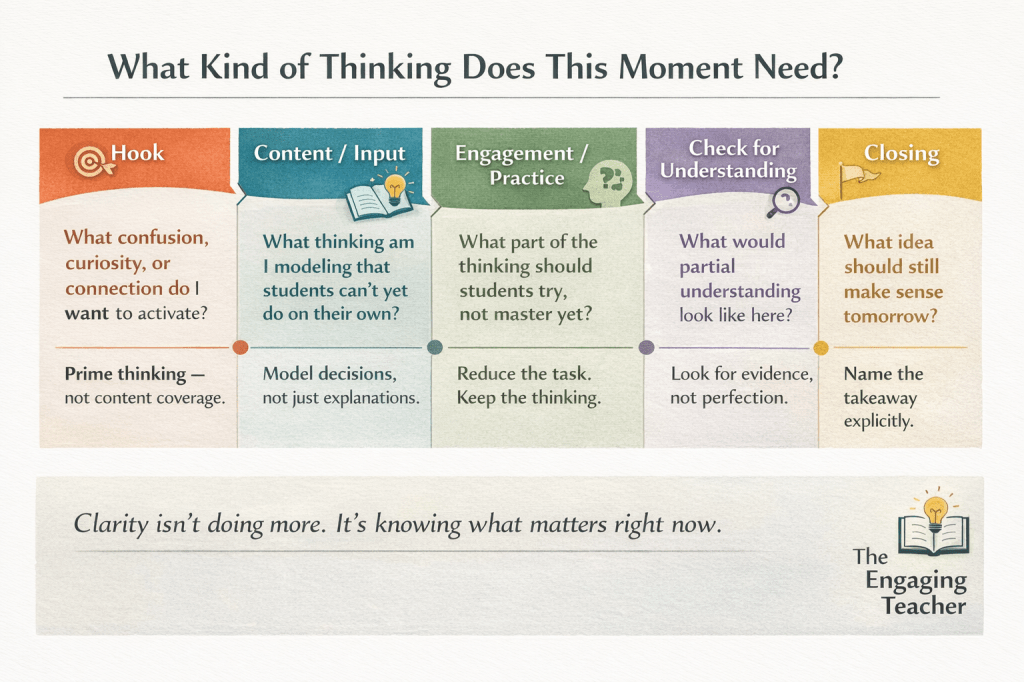
Think-Aloud Prompts for Teachers
Learning deepens when teachers model their thinking and connect ideas through language students can follow.
For new teachers:
When you’re focused on getting through the lesson, it’s easy to forget that students don’t see the thinking behind your choices. These prompts help you model how to approach learning — not just what to do — without needing a script or extra prep.
For mentor teachers & instructional coaches:
Use this as a shared language tool when supporting lesson delivery. It helps newer teachers externalize expert thinking at key moments of instruction and makes invisible decision-making visible to students.
Clear modeling and language help surface student thinking, making it easier to notice what’s working and what may need adjustment.
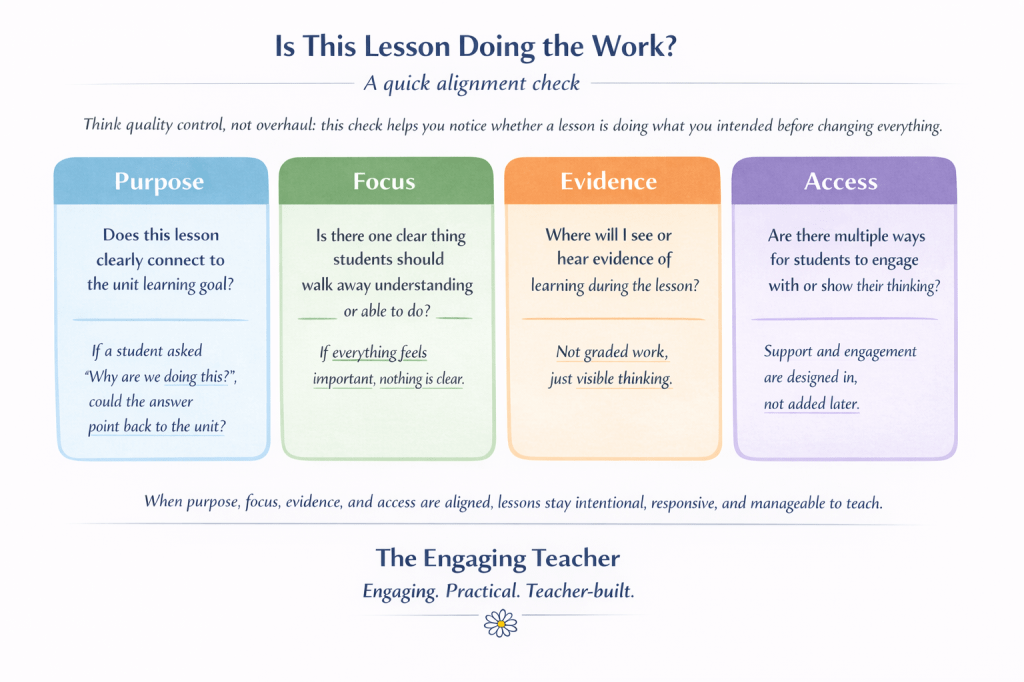
Lesson Alignment Check: Is This Lesson Doing the Work?
Think quality control, not overhaul: this quick check helps you notice whether a lesson is doing what you intended before changing everything.
For new teachers:
This graphic gives you a quick, teacher-friendly way to check whether a lesson really supports your unit goals, stays focused on one clear idea, and invites meaningful thinking. Instead of guessing whether students are learning what you planned, this alignment check helps you notice learning as it happens without adding another planning task.
For mentor teachers & instructional coaches:
This visual provides shared language you can use to support teachers in noticing whether lessons align with unit goals and classroom intentions. It’s a gentle, practical way to ground reflective conversations in observable elements of instruction without turning reflection into evaluation.
When purpose, focus, evidence, and access are aligned, lessons stay intentional, responsive, and manageable to teach.
Engagement Without Gimmicks
Engagement isn’t something teachers add — it’s something that emerges when students are given meaningful work and trusted to think.
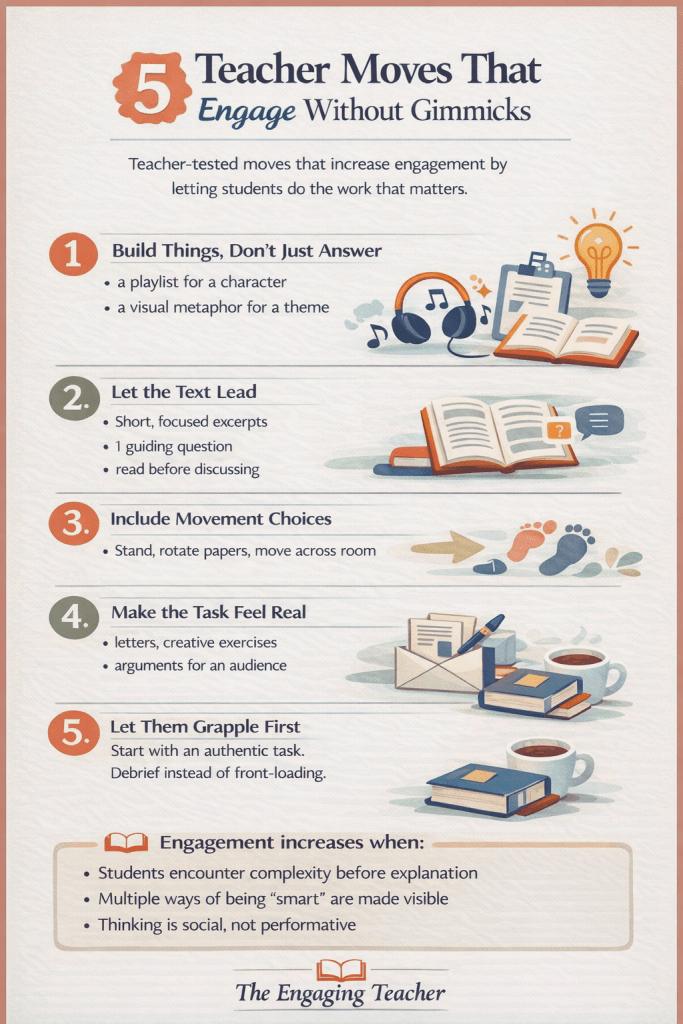
For new teachers:
If you’re new to teaching, use this as a reminder that engagement isn’t something you have to perform. Pick one move from this list and try it this week — especially starting with the task before explaining it. Let students wrestle a bit. Then talk it through together. If it feels messy, that’s not failure. That’s thinking.
For mentor teachers & instructional coaches:
This graphic works well as a coaching tool. Use it to help newer teachers name why certain practices increase engagement — especially tasks that invite thinking before explanation and broaden what “smart” looks like in a classroom. Which move do you see most often in strong instruction?
When planning is intentional and instruction is responsive, engagement doesn’t need to be manufactured.
These teaching and unit-planning tools are grounded in learning science, including backward design, instructional alignment, scaffolding, cognitive load, and metacognitive practice.
 The Engaging Teacher | Instructional Design & Teacher Resources for Classroom Engagement